
By the time August rolls around, our family has reached peak summer velocity.
We’ve eaten watermelon over the sink. Popsicle sticks are all over the yard. Everyone is staying up way too late – every single night. More than once, someone—me—has looked at a bowl of popcorn and said, “This is dinner.”
It’s been good. The kind of good where the sand is probably never coming out of the car.
But then something shifts.
Backpacks show up in store aisles. The mornings cool off just a little. The sun drops earlier than it did a week ago. Even if school hasn’t started yet, September starts to feel close.
That’s when I start thinking about getting a grip on the whole food situation.
Not a diet. Not a plan.Just proper dinners again.
When people talk about Pacific salmon, a few names always come up first.
King salmon gets the attention. It’s flashy. It’s rich. There’s a reason it’s called the king.
Sockeye shows up in the photos—deep red, bold flavor, and that hump. So sartorial.
Coho usually sits a little quieter in the background.
That’s partly timing. Coho season arrives later than the early spring and summer salmon runs. While king and sockeye often peak earlier in the summer, coho start showing up in greater numbers from late summer into fall—typically August through October, depending on the region and fishery.
By the time coho really hits its stride, the conversation has usually moved on to pumpkin spice lattes.


But coho is more of an everyday meal fish. It makes the dinner rotation often because of the price and because it more than qualifies as eating something good for you.
A quick bit of context: coho, also called silver salmon, are wild Pacific salmon that spend most of their lives in the ocean before returning to freshwater rivers to spawn. They’re not as large as kings, and they don’t have the deep red flesh of sockeye, but they’re steady, reliable fish with a clean flavor and a texture that holds up well to heat.
They’re also one of the more accessible wild salmon options in late summer and fall, which is part of why they end up on our table so often when everything else feels like it’s winding down.
When I’m deciding what to cook this time of year, I keep coming back to coho.
Not because it’s trying to be anything else.
Because it doesn’t need to.
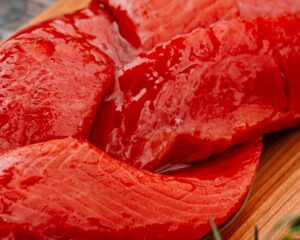
Here’s what makes it work for us:
- The flavor is straightforward. Not overly rich, not too mild. It just tastes like salmon.
- The texture holds up. It stays intact on the grill without getting fussy or falling apart.
- It works with cedar. The smoke from a plank doesn’t compete with it. It settles in around it.
- It’s flexible. Lemon, herbs, a little butter, a brush of maple if you want it. It all works.
- It’s usually easier to find and more affordable than king salmon. That matters when you’re feeding people who are already asking what’s for dinner again in 20 minutes.
Coho is the kind of fish that doesn’t ask for much attention but rewards you when you give it a simple setup.
And that’s really the point.
Because this time of year, I don’t want dinner to be a project.
I want something I can start without thinking too hard.
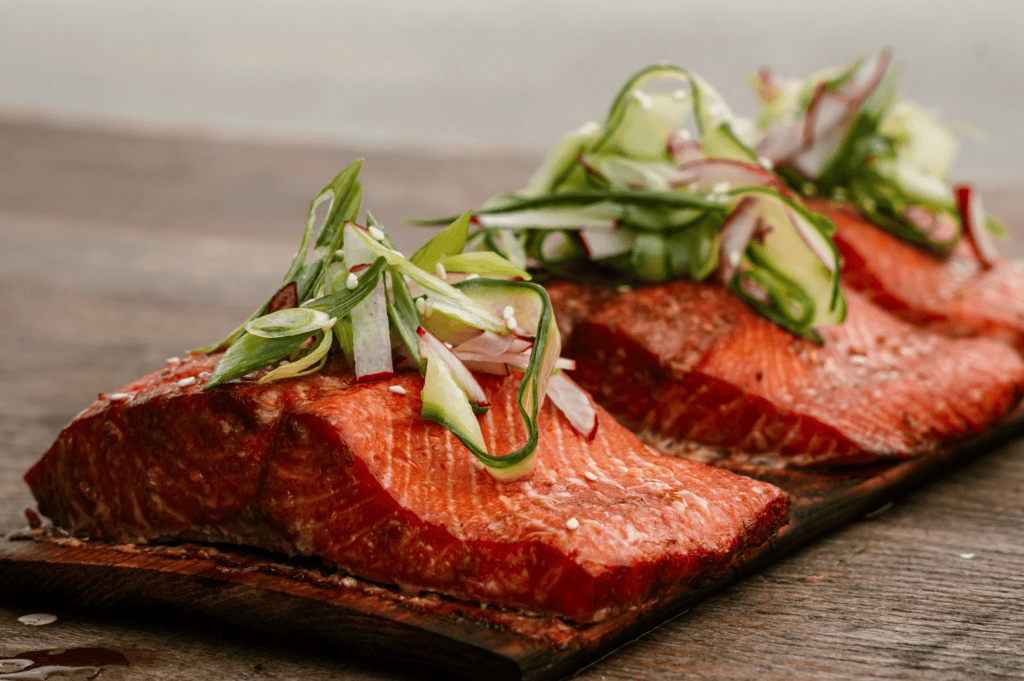
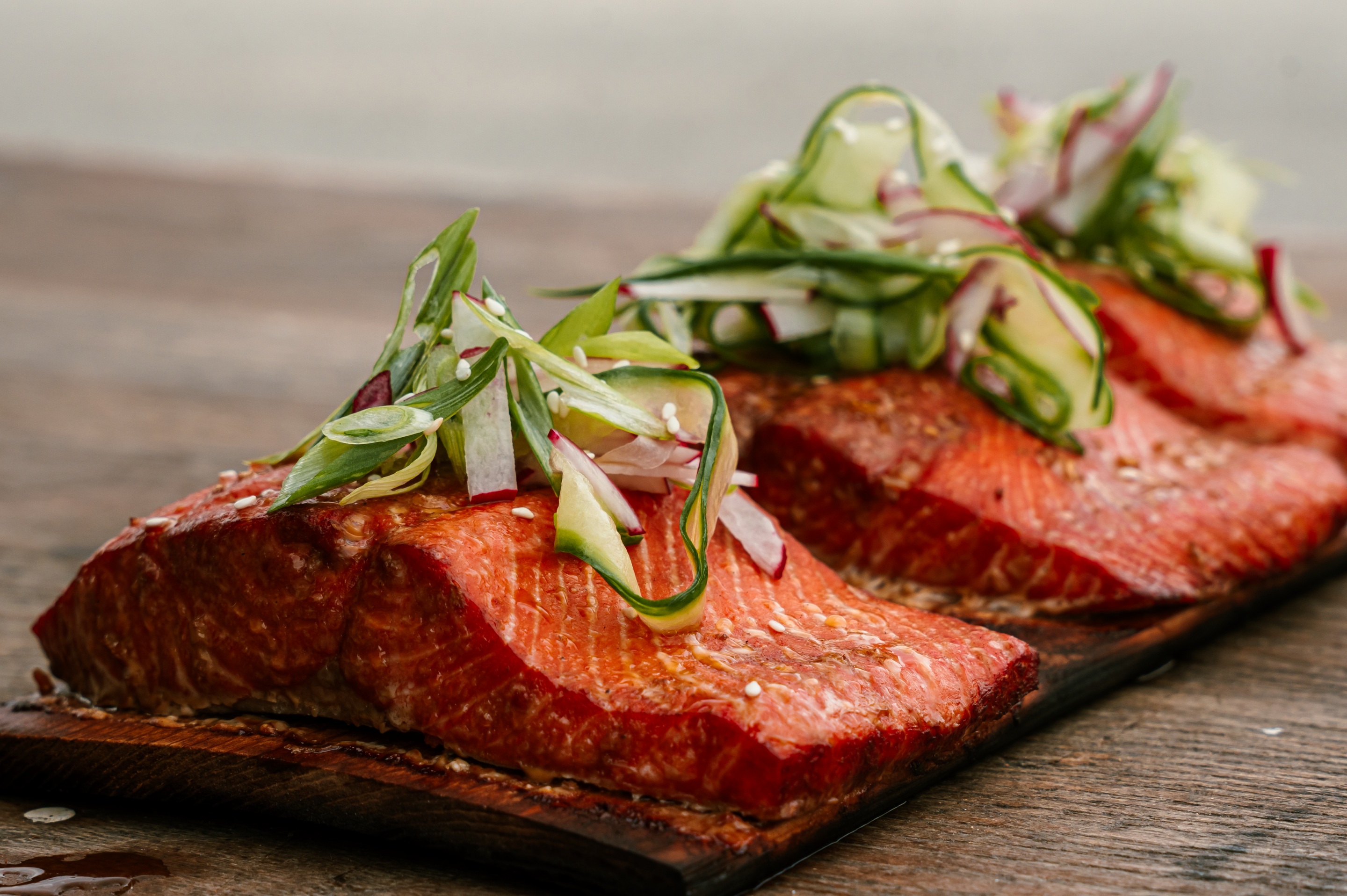
Toss a cedar plank in water. Heat up the grill. Slap on the rice cooker. Slice a couple of cucumbers, toss in rice wine vinegar if you have it. Sesame seeds on top, just to make it look pulled together.
That’s it.
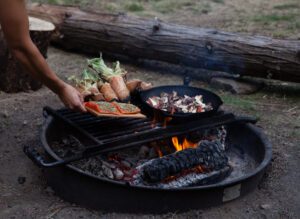
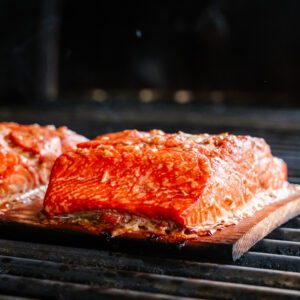
The salmon goes on the plank, the lid closes, and for the next 15 to 20 minutes, nothing else needs to happen.
No juggling. Minimal planning. Just heat, smoke, and a meal that takes care of itself.
When it’s done, I’ll usually add nothing more than a squeeze of lemon and maybe a little salt.
We’ll eat it with rice and those cucumbers, still cold and crisp, right out of a bowl.
It’s not complicated. I can’t handle complicated right now.
If you’re looking for a way to ease out of summer chaos and back into something that feels a little more reasonable and recognizable as dinner, coho on a cedar plank is a good place to start.
It’s not the loudest salmon in the case.
King is still the king, after all.