The rituals, prep, and decisions that matter before the first Copper River salmon ever hits the fire.
Photo courtesy of Copper River Salmon
Copper River salmon is equal parts ingredient and event. It’s a hero ingredient in the truest sense—rich, fleeting, precious. People wait for it. Ask about it. Plan around it. For some, its arrival edges into holiday territory, marking the start of a short, anticipated season.
And that sense of occasion isn’t imagined. It’s built into how the season begins.
The Copper River opener is a highly coordinated first harvest. Alaska sets a specific date based on fish counts, usually sometime in mid-May—and until that moment, the fleet waits. Then it opens, and everything moves at once. Boats head out immediately, often into rough conditions, chasing a narrow window. It’s not a slow ramp-up. It’s a short, intense push.
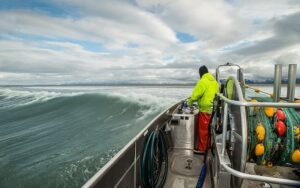
Photo courtesy of Copper River Salmon
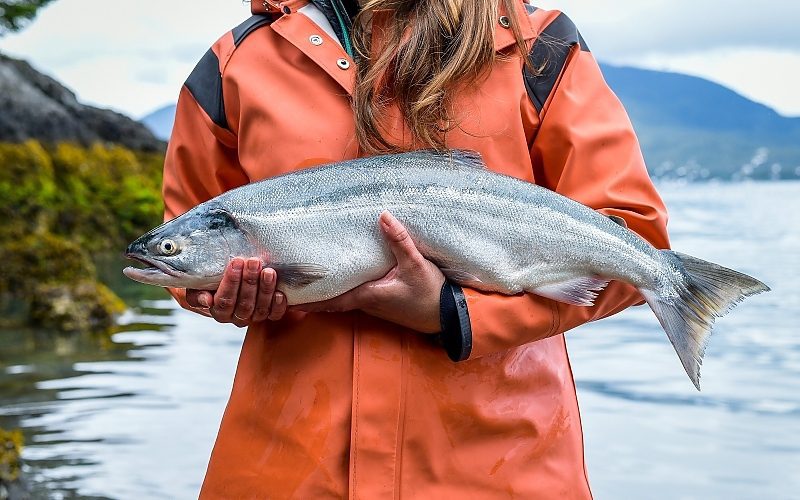
The first fish that comes in carries weight beyond its size. It’s often rushed out of Alaska and flown straight to Seattle, where it’s greeted by chefs, media, and a bit of quiet fanfare. At times, that first salmon has been auctioned or featured as a headline item on restaurant menus the same night. It’s less about that individual fish being eaten and more about what it represents: the season has officially begun
From there, the pace doesn’t let up. Within a day or two, the system is in full motion—fish processed, packed on ice, and flown to major hubs. Restaurants and premium grocers move quickly, all trying to be among the first to offer Copper River salmon. Being early carries a certain status. It signals attention, care, and a connection to something fleeting.
There’s a rhythm to it, and for the people closest to it, a set of habits that come around every year.
Maybe it’s superstition. Maybe it’s just experience showing up in familiar ways. Either way, the season doesn’t start casually.
It usually happens at the counter.
You’re standing there, looking at it—thicker cuts, deeper color, a price per pound that makes you do a quick recalibration of what dinner is supposed to cost. You might ask a question or two, but mostly you’re trying to read it. Decide if this piece feels like the right one.
There’s a subtle pressure to get it right. Not just to buy it—but to choose well.
Is thicker better? Sometimes. Not always.
Is that one worth a few dollars more? Maybe. Hard to say.
And then there’s the quiet math: how much is enough? Enough to feel like an occasion, not so much that you’re left with a sense you overreached.
Even people who cook all the time can get a little tentative here. Copper River salmon has a way of doing that. It asks you to pay attention in a different way.
You make the call, trust your instincts (or at least pretend to), and walk away with it wrapped in paper that suddenly feels like it carries a bit more weight than usual.
That’s the start of it.
And that’s part of what makes salmon such a “hero” ingredient. It arrives with expectation already built in. People don’t want to mess it up.
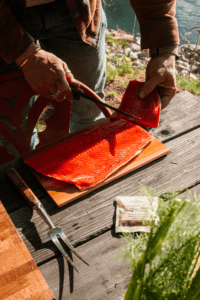
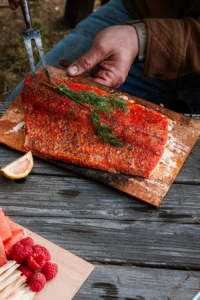
Which is why, for all the focus on the fish itself, the quieter decisions start to matter more—the fire, what goes under and over the fish.
The goal isn’t to compete with the fish. But what really could? It’s to create a clean, steady environment, a squeeze of lemon, a pinch of salt—and then get out of the way.
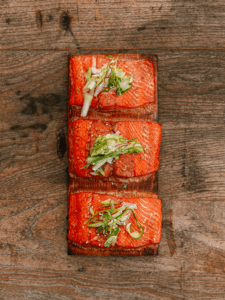
That’s where something as simple as a cedar plank earns its place. Not as the star—just holding heat and letting the fish do what it was always going to do.
By the time the salmon hits the fire, most of the work should already be done.
And then, almost without noticing, it becomes a pattern.
People remember it. Not in a loud way, but in the kind of quiet mental note that sticks. That was good. Better than expected. Worth doing again. Worth making a tradition of.
So when the season rolls around, there’s a small pull to come back to it. Not to reinvent anything. If anything, the opposite. To see if you can land in that same place again.
Maybe you do it the same way. Maybe you change one small thing and immediately question it.
There’s a familiarity to it—the timing, the feel of it, the way the fire comes together, the way the fish looks before it ever hits heat. It starts to feel less like a one-off meal and more like something you return to.
A marker, almost.
Not a big tradition with rules and expectations. Just a quiet, seasonal reset.
And part of the appeal is that it doesn’t ask much of you beyond paying attention.
Show up, do a few things well, and let the rest take care of itself.